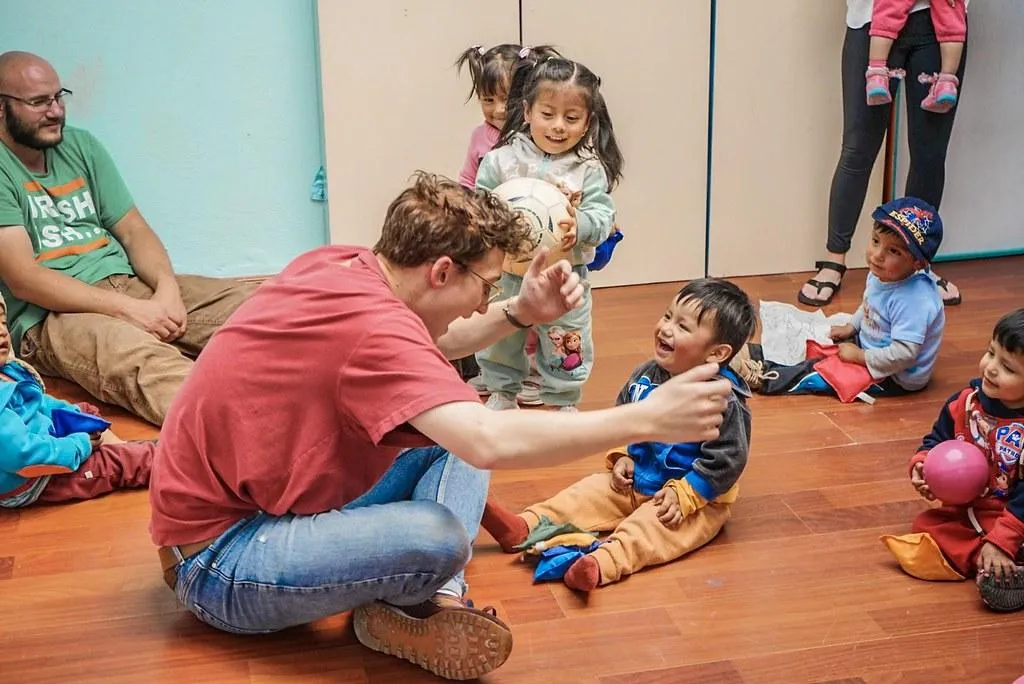
What Is an Orphanage Volunteer Trip? A Guide for First-Time Volunteers
Key Takeaways
An orphanage volunteer trip sends travelers abroad to spend time with children living in residential care, usually for one week to three months.
Most days revolve around companionship — playing, tutoring, and simple caregiving tasks — rather than skilled medical or social work.
Child welfare groups warn that short-term, poorly vetted volunteering can disrupt a child's attachment and unintentionally support institutionalization. A responsible program addresses that risk through volunteer screening, long-term orphanage partnerships, and licensed local care facilities.
Before booking, first-time volunteers should ask about background checks, how long the organization has partnered with each home, and where program fees actually go.
OSSO has run vetted orphanage volunteer trips in countries such as Ecuador and Mexico since 1998 and offers programs ranging from one week to a full semester.
What Is an Orphanage Volunteer Trip?
An orphanage volunteer trip is a structured program that places travelers inside a residential care facility, often called a children's home or orphanage, to support daily operations and spend time with the children who live there. Programs run everywhere from Southeast Asia to Latin America and typically last anywhere from a single week to several months.
Organizations such as Orphanage Support Services Organization (OSSO) have built these trips around long-term relationships rather than one-off visits. Currently, OSSO provides ongoing support to 11 Ecuadorian orphanages and 3 Mexican orphanages, and has historically aided over 30 orphanages across countries like Thailand, Uganda, and Peru, sending more than 5,000 volunteers who have dedicated nearly 1.5 million hours of face-to-face service.
A Day in the Life of a Volunteer
No special training is required for most orphanage volunteer roles, which puts first-timers at ease once they see how the schedule actually works. With OSSO, volunteers typically head out in the morning and again in the afternoon, visiting a different partner orphanage each shift rather than staying in one place all day. That rotation is intentional: It spreads attention across more children while still giving volunteers repeat visits to the same homes throughout the week, so relationships have room to build.
Volunteering with children abroad can look different depending on the day and the age group you’re working with. Younger children might mean painting, finger games, or simple art projects like papier-mâché; older kids and teenagers are more likely to want a soccer match, a card game, or help with practicing a few English phrases. Volunteers working with residents who have disabilities often spend time on a puzzle, a sensory activity, or just sitting with a child who wants company. OSSO provides a themed activity idea each week, along with hands-on training, so first-time volunteers show up confident and competent.
The volunteer experience generally looks like this:
Morning and afternoon shifts at different orphanages, with time in between to rest or prepare activities.
Hands-on training and a new themed activity suggestion each week from program staff.
Basic caregiving support, such as helping with feeding or bedtime routines, when orphanage staff need an extra hand.
One full day off midweek for a group excursion, which is voted on by volunteers and might include waterfalls, hot springs, an Andes hike, or a visit to the equator line at Mitad del Mundo.
Evenings back at group housing with other volunteers, which is where a lot of first-timers say the camaraderie sneaks up on them.
By design, the days are repetitive in a good way. Seeing the same kids shift after shift, week after week, is what turns a volunteer from a stranger into a familiar, trusted face — which is also the point behind OSSO's emphasis on longer stays over quick, one-time visits.
How to Choose a Responsible Program
International orphanage volunteering draws real scrutiny; for the well-being of the children, it’s important to choose reputable volunteer organizations that hold partner orphanages to high standards. Criticism points out that untrained volunteers who rotate through on short, poorly vetted visits can leave children feeling abandoned each time someone leaves, and that paid volunteer demand can sometimes incentivize institutions to recruit children rather than reunite them with family. That's a real risk in this industry, not a hypothetical one, so the organization behind a trip matters enormously.
The safeguards that address those concerns are fairly concrete, and they double as a checklist for evaluating any program:
How long has the organization partnered with this specific home, rather than rotating through new ones?
Are volunteers and orphanage staff background-checked?
Is the orphanage licensed and monitored by local authorities?
Where do program fees go, and is that spending disclosed?
Does the program favor longer, repeat stays over one-off visits?
OSSO is committed to serving children well and reducing harm. We screen partner homes for licensing and standards of care, and run background checks on volunteers before placement.
Why First-Time Volunteers Consider OSSO
OSSO is a registered 501(c)(3) nonprofit that has hosted more than 5,000 volunteers since its founding and currently supports 11 orphanages in Ecuador and three orphanages in Mexico. Trips run from one week up to a three-month semester; program fees cover housing, food, and local staff support; and families can volunteer together. Applicants don't need prior experience, though those matched with residents who have disabilities receive on-site training and orientation.
Getting Ready for Your Trip
Standard immunizations are recommended, though OSSO notes none are required beyond what the CDC generally advises for international travel. Most programs arrange group housing, in-country transportation, and orientation before volunteers ever meet the children.
An orphanage volunteer trip can be a genuinely meaningful way to spend a summer, semester, or gap year, provided it's done through an organization that treats child welfare as the priority it is. Explore OSSO’s volunteer programs to see how you can support children in need.
OSSO is an Idaho-based nonprofit founded in 1998 to support orphanages, primarily in Ecuador and Mexico, through year-round volunteer service and financial assistance. Explore our current volunteer opportunities or donate today to help us create a world where every child can feel loved.
